
Why yes/no riddles are perfect for the car
In a car, the best games are the ones you play with nothing but your voice. Cards slide off your lap, dice vanish under the seat, and whoever is in the back can't see the board anyway.
Situation puzzles, on the other hand, only need a voice and a bit of brainpower. One person knows the answer, everyone else asks questions. Anyone can join in, front seat or back seat, and you can pause at any moment — for a fuel stop, or when the traffic suddenly needs full attention.
There's another bonus: a good riddle keeps a group busy for ages. Instead of a tenth round of "I spy", you get a story everyone puzzles over and argues about together. The miles slip by almost unnoticed.
Safety first: the front passenger handles the phone
One rule above all: whoever is driving does not touch the phone and does not look at the screen. Their attention belongs to the road. Shouting out guesses is fine as long as it isn't distracting — in tricky traffic, the riddle waits.
The phone is always handled by the front passenger or someone in the back. That person reads the situation out loud and passes on the answers. That way the whole car can play without anyone at the wheel being distracted.
Tip: decide before you set off who's in charge of the phone. Then there's no debate later when boredom kicks in, and nobody ends up passing the phone forward in a hurry.
With the AI game master: just speak your questions
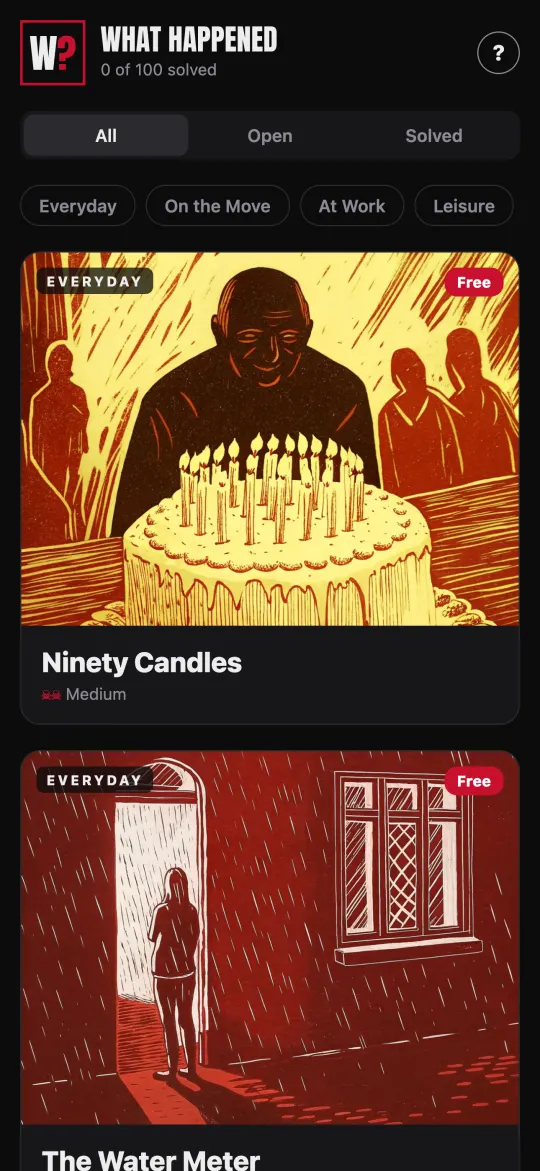
In AI mode nobody in the car knows the answer — everyone guesses together. The front passenger reads out the situation, the others call out their questions, and he speaks them into the app using voice input. The AI game master replies with Yes, No, Partly, Irrelevant or "Not a yes/no question".
The upside: absolutely everyone gets to guess. Nobody has to play game master and miss out on the fun.
Once all the key facts of a story have been guessed, the case is solved. Then the front passenger reads out the resolution — the moment the whole car shouts "Ohhh, that's it!" Note: the AI game master needs an internet connection on the phone.
Offline with no signal: group mode
On country roads, abroad or in a tunnel, the signal often disappears. That's what group mode is for — it works completely without internet and without AI.
Here's how: the front passenger picks a story and reads the solution silently to himself. Then he reads the opening situation out loud. Everyone else asks him yes/no questions and he answers based on the solution. He's the game master now, and the only one who knows what happened.
Group mode also works on ferries, trains and flights, with the phone in airplane mode. After each solved story, swap who reads the solution — everyone except the driver, of course. That way everybody gets a turn as the all-knowing storyteller.
Tips for holiday drives with family and friends
Pick a difficulty that suits the group. What happened? has three levels — for mixed groups, the easier stories are a good place to start.
Mind the ages: the riddles revolve around death, accidents and crime. They're never gory, but we recommend them for ages 12 and up. The game isn't meant for younger kids in the back seat.
Set one simple rule: whoever asks a question waits for the answer before the next one comes. That keeps things fair, even when it gets heated.
With the 12 free stories you can start right away. Try the examples below before the trip begins — then you'll already know how the game works.