
What happened?
🌐 English
Crime Riddles: Crack the Case by Asking the Right Questions

Crime Riddles: Crack the Case by Asking the Right Questions

In What happened? you're the detective. You get a baffling case in a couple of sentences and work out what happened by asking yes/no questions. No crime scene photos, no case files — just your own deduction and a game master who knows the truth.

Detective work in its purest form

Classic crime stories live and die on one question: how did it come to this? That's exactly what crime riddles are about — you know the outcome and have to reconstruct the chain of events.

In What happened?, it all starts with one to three sentences. A death, a strange accident, a crime that seems to make no sense at all. Like an investigator in an interview room, you ask questions — except here the answers are always honest.

The fun is in piecing it together. Every answer is a clue. You gather them, rule out false leads and build a theory until it accounts for every fact. And not every case is a murder: sometimes it's an accident, sometimes a crime — and sometimes something you'd never have seen coming.

How a case plays out in the app

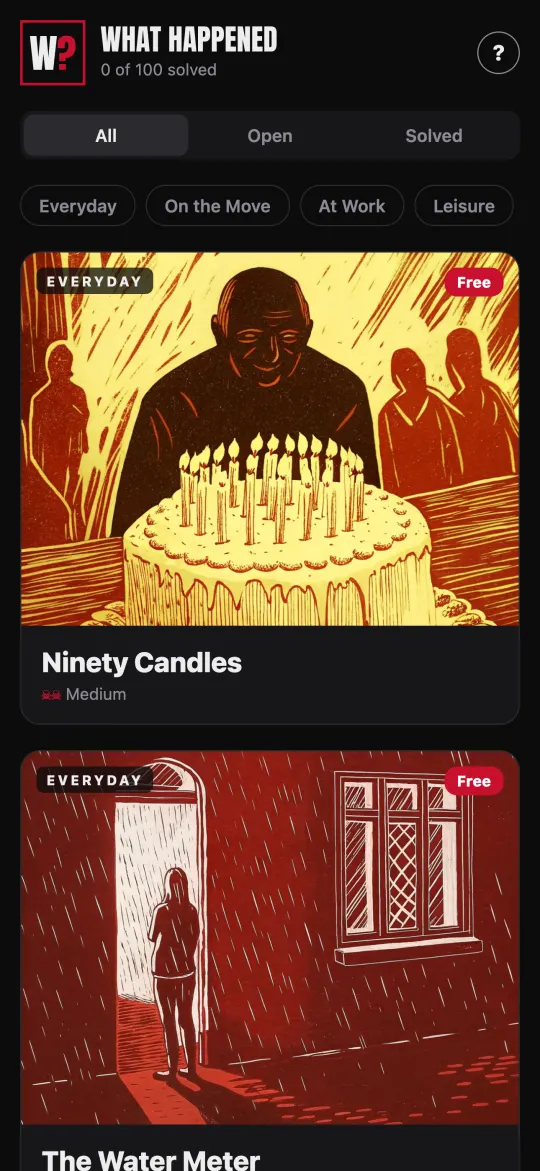
You pick a story from one of the four packs: Everyday Life, On the Road, At Work or Free Time. Every story comes with its own woodcut-style illustration that captures the mood of the case.

Then the investigation begins. You type your questions or speak them out loud. The AI game master knows the full solution and answers with Yes, No, Partly, Irrelevant or "Not a yes/no question".

Each case has its key facts — the points you need to uncover to explain how it all happened. Once you've worked them all out, the case counts as solved.

With three difficulty levels there are cases for beginners and cases that will keep experienced armchair detectives puzzling for a while. 12 cases are free; further packs cost a one-time €2.99, or €7.99 for all of them.

Detective tips for crime riddles

Start with the basics: did someone die? Was it a crime, an accident or something else entirely? Was another person involved? These questions split the case into broad directions.

Ask about motive, means and opportunity — but don't stop there. Crime riddles often hinge on one unusual detail that nobody would look twice at in a real investigation.

Distrust your first suspicion. The opening situation is usually worded to point you towards the wrong explanation. Ask yourself: what assumption have I made that the text never actually states?

Sum up what you know at regular intervals. Saying the confirmed facts out loud makes it much easier to spot which piece of the puzzle is still missing.

Investigate together: a crime night with friends

Crime riddles are even better as a team sport. In the group mode of What happened?, one person takes on the role of game master: they read the solution silently and answer everyone else's questions. It works with no internet and no AI.

That turns an ordinary evening into a proper murder mystery night. The detectives can swap theories, nudge each other towards clues, or compete to see who cracks the case first.

The tone stays darkly humorous throughout: the cases deal with death, accidents and crime, but they're never explicit or gory. We'd suggest ages 12 and up. Try the examples below — you can solve your first case right here.
Try it out: two puzzles

Think about which questions you'd ask first — then open up the solution.

Half Past Two, Twice

Half Past Two, Twice

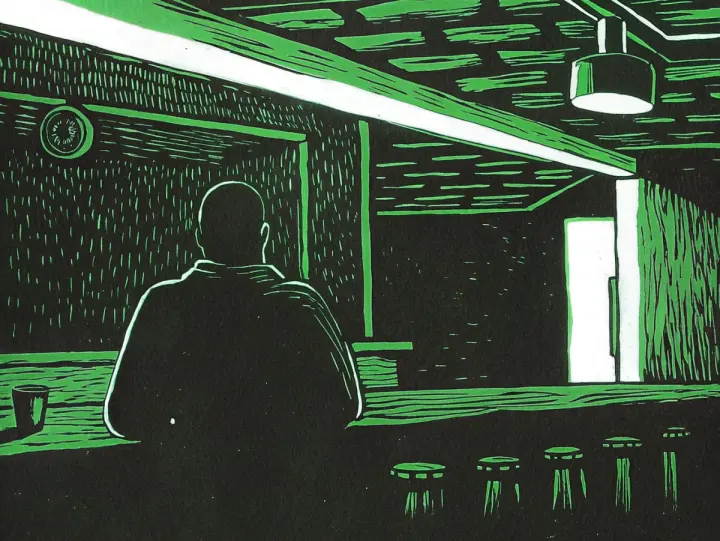
A bar's security camera shows Mr Brandt at the counter at exactly 2:30 a.m. At 2:30 a.m. that same night, 40 kilometres away, his business partner was shot dead. Brandt is convicted of murder anyway – and rightly so.

Show the solution

It was the night Germany switched from summer to winter time: at 3:00 a.m. the clocks went back to 2:00 a.m., so 2:30 a.m. happened twice. Brandt shot his partner during the first 2:30, used the hour he had gained to drive the 40 kilometres to the bar, and made a point of showing his face to the camera at the second 2:30. But his phone's cell-tower records, which are stored in universal time, showed he was at the crime scene for the first 2:30 and only reached the bar by the second – and the seemingly perfect alibi collapsed.

Someone Else's Blood

Someone Else's Blood

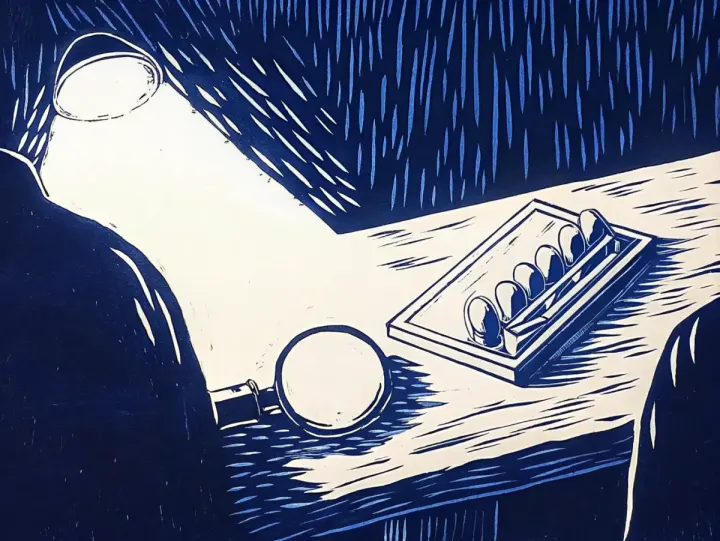
At a murder scene, police find the killer's blood. The DNA is a clear match to a man who was provably behind bars in prison at the time of the crime. He is innocent, and the analysis was flawless.

Show the solution

Years earlier, the prisoner had registered as a stem cell donor and given bone marrow to a man with leukaemia. Ever since, the recipient's marrow has produced blood carrying the donor's DNA. That recipient was the real murderer: his blood at the scene bore the prisoner's DNA. Through the donor registry, the police tracked down the recipient and convicted him with a saliva sample, which showed his own DNA.

Frequently asked questions

What are crime riddles?

Crime riddles are short puzzle stories in which you solve a criminal case, an accident or a mysterious death. In What happened? you get a brief opening situation and reconstruct what happened by asking yes/no questions.

Is there an app for solving criminal cases?

Yes — What happened? for iPhone and Android, for example. An AI game master knows the solution to every case and answers your questions. 12 cases are free.

How hard are the cases?

There are three difficulty levels. Beginners start with the easier cases, seasoned puzzle fans go straight for the tricky ones. So there's always a case that suits you.

Can I investigate together with friends?

Yes. In group mode one person reads the solution silently and answers everyone else's questions — completely offline. Or you can all guess together with the AI game master.

Ready for your first case?

Download What happened? and play 12 stories free — no account, no ads, no subscription.

More ways to play What happened?