What makes a riddle dark
Dark riddles revolve around the shadowy side of life: death, accidents, crime and strange twists of fate. The macabre is never there for its own sake – it's the engine of the suspense. A situation in which somebody has died instantly raises questions, and answering them is exactly the point.
The real trick is the contrast. The opening scene feels grim or unsettling, while the solution turns out to be surprising, absurd or drily funny. That swing from shiver to smirk is what black humor is all about.
What happened? gives you 100 such stories in four packs: Everyday Life, On the Road, Work and Leisure. The eerie doesn't lurk in a haunted castle here, but in the places you least expect it – at the supermarket, on a trip, at work or during a hobby.
The tone: dark, clever, never gory
We talk about death, but we never show it. The stories in What happened? steer clear of explicit violence, blood and shock effects. The tension builds in your head – out of everything you don't know yet.
The humor is pitch black and runs on irony, unlucky coincidences and endings that make you wince and laugh at the same time.
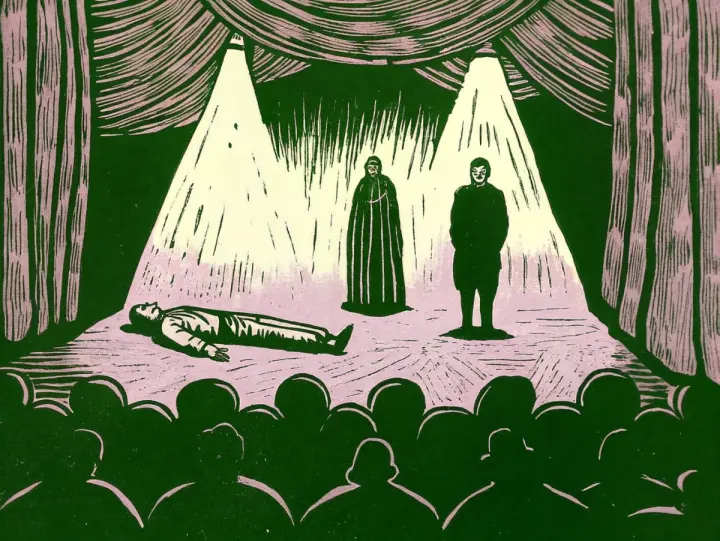
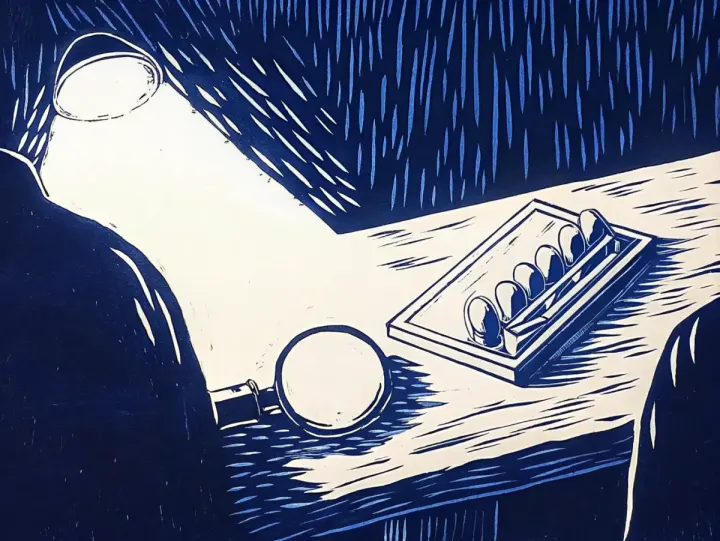
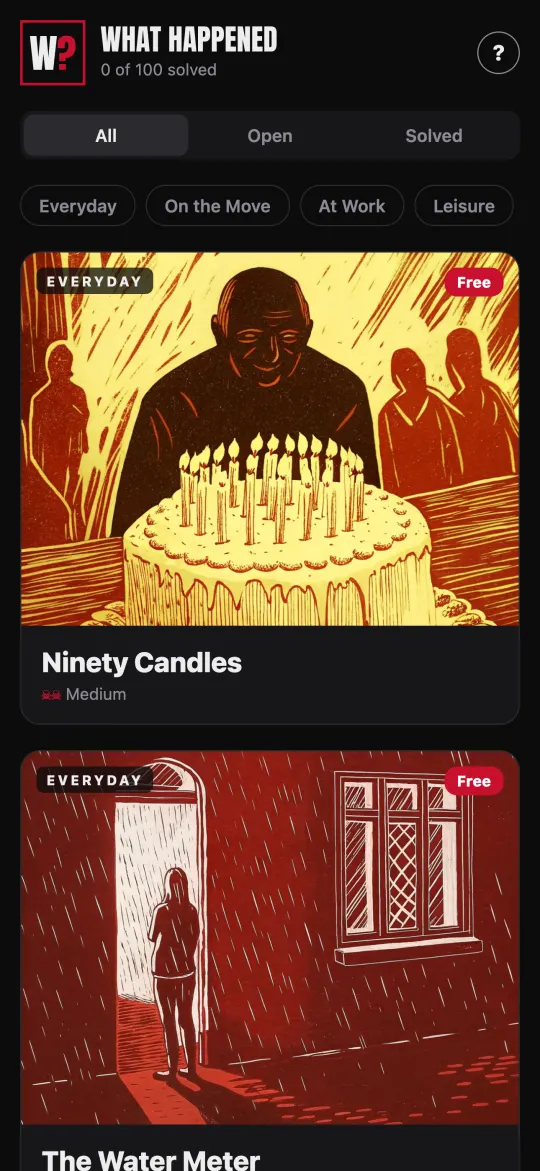
The look matches the tone: every story comes with its own woodcut-style illustration. The images recall old-fashioned tales of horror and set the mood without showing anything graphic.
In short: if you like crime fiction, true crime podcasts or macabre anecdotes, you'll feel right at home. If you're after splatter and jump-scare horror, this isn't for you.
Age guidance: best from 12 and up
We recommend What happened? for ages 12 and up. Not because of brutality – there isn't any – but because of the themes: death, accidents and crime are central to the stories.
For teenagers, that's often precisely the appeal. The riddles take them seriously and genuinely challenge their thinking. Parents who aren't sure can try the examples on this page together with their child and judge the tone for themselves.
For adults the rule is simple: the blacker your group's sense of humor, the better the fit. For an evening with people who are squeamish about macabre subjects, pick a different game – or test the water first with the 12 free stories.
What's waiting for you in the app
100 original stories in four packs and three difficulty levels, each with its own woodcut illustration.
An AI game master who knows the solution and answers your questions with Yes, No, Partly, Irrelevant or "Not a yes/no question". You can type your questions or ask them out loud.
A group mode for dark evenings with friends: one person reads the solution silently, everyone else grills them. It works with no internet and no AI.
A fair model: 12 stories free, then €2.99 per pack or €7.99 for all packs – a one-time purchase, no subscription. Packs you own keep growing with new cases, and a push notification lets you know when new stories arrive.
No account, no ads, no tracking – and all of it in 14 languages.
Tips for a dark riddle night
Dim the lights. It sounds silly, but it works: dark riddles are at their best in the evening, whether on the sofa, around a campfire or up in a cabin.
Read the opening scene out slowly and with feeling. The host in group mode is allowed to be a little dramatic.
Don't let that first shudder steer you. With situation puzzles, the obvious, gruesome explanation is usually a dead end. The truth is nearly always stranger than you think.
Swap the narrator role after every story so everyone gets a turn leaving the others in the dark. And try the examples below: they show you just how dark – and how clever – What happened? really is.